
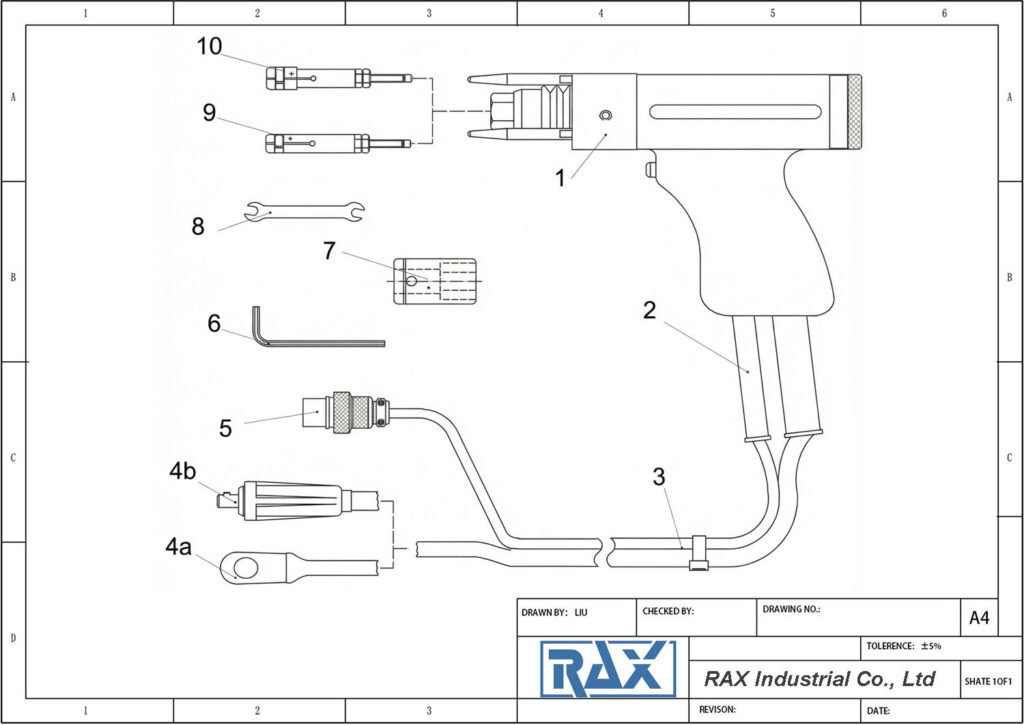
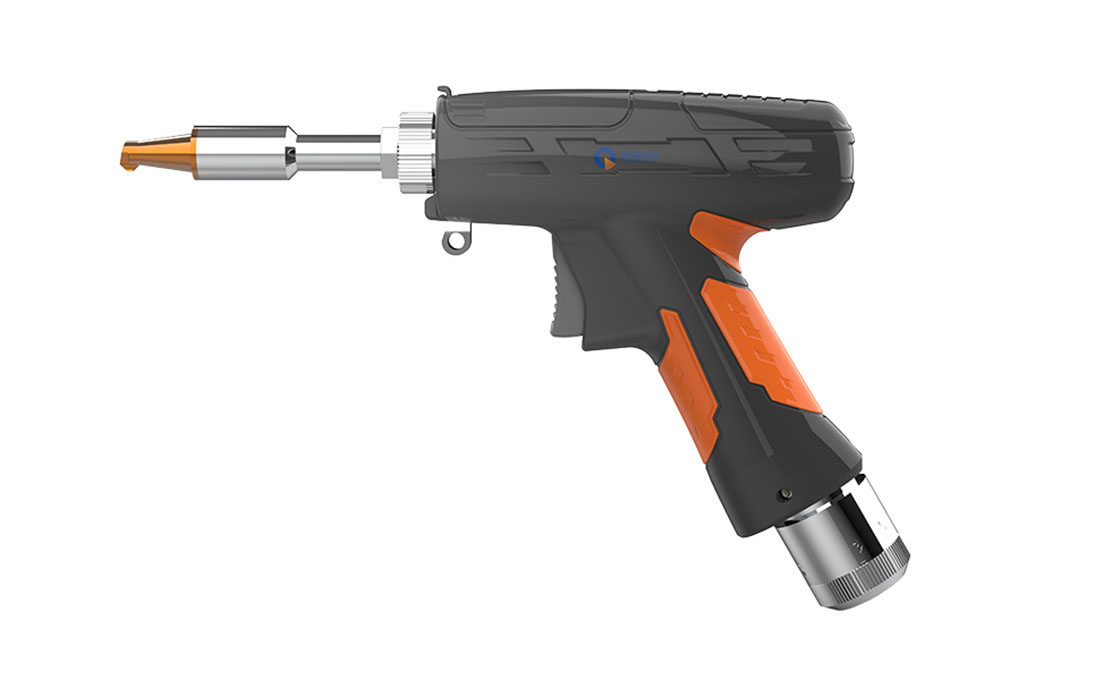
A stud welding gun fuses metal studs or fasteners to a base workpiece through an electric arc process. Two primary methods exist: capacitor discharge (CD) and drawn arc (DA), each suited for different material thicknesses and stud diameters. The process attaches fasteners without holes, bolts, or rivets across construction, automotive, shipbuilding, and manufacturing applications. Models with electronic lift control deliver complete process control and repeat accuracy, with CD welding cycles completing in milliseconds to produce strong, structural welds with minimal thermal distortion.
Ergonomics and durability define the tool design. Lightweight models weigh under 2 lbs to reduce operator fatigue during prolonged use. Housing constructed from glass fibre reinforced polyamide or Delrin withstands tough operating conditions and heavy workloads. The grip and balance accommodate work gloves while keeping cables secured away from the hand.
Available models span capacitor discharge, drawn arc, and short-cycle welding configurations with welding ranges from 3mm to 25mm diameter studs. Standard, hi-lift, and short-cycle variants differ in cable thickness, stud lifting ability, and weight to handle applications from delicate thin sheets to thick, highly stressable joints. Automation-ready models feature interfaces for remote triggering and integration with auto-feed systems.
Performance specifications include welding range, weight, and cable dimensions. Typical drawn arc guns weld 3mm to 16mm diameter studs at up to 10 studs per minute, weighing around 5.4kg with cable. Compact CD models weigh as little as 0.6kg without cables. Electronic lift adjustment, damping control, and overheat prevention systems ensure stable welding results across numerous operations.


Your Source for High-Performance Stud Welding Guns
At RAX Industrial, a leading manufacturer of welding and cutting equipment, high-quality products are our priority. Our specialty is the rapid design and manufacturing of precision welding solutions, including our range of stud welding guns. Our tried and tested stud welding guns enable the highest possible consistent welding quality due to special design and advanced engineering.
As a premier integrated manufacturing hub, we leverage our 20+ years of expertise and a dedicated team of 50+ R&D specialists to ensure every stud welding gun is built with durable materials and cutting-edge technology. This commitment to integrated R&D and production within our 18,000 m² facility results in reliable, high-performance guns that offer a fast and accurate welding process for attaching studs to metal surfaces.
Our stud welding solutions are designed for a wide array of applications across industries such as construction, automotive, and industrial manufacturing. They are built to deliver high strength, fast attachment, and cost-effective operation. Customer satisfaction is our utmost commitment, backed by our agile supply chain for rapid development and a comprehensive 12-month warranty.
Contact us today for assistance in selecting the correct stud welding equipment for your application. We offer expert technical support and OEM/ODM customization services to provide the ideal solution.
| Parameter / Model Series | Welding Range (Stud Diameter) | Typical Weight (without cables) | Key Features & Construction | Primary Welding Process | Compatible Materials |
|---|---|---|---|---|---|
| Compact / CD Models | 3 mm – 10 mm (#6 – 3/8″) | 0.6 kg – 1.0 kg (approx. 1.3 – 2.2 lbs) | Lightweight, compact design; impact-resistant housing (e.g., Delrin); often suited for automation interfaces. | Capacitor Discharge (CD), Short Cycle | Mild Steel, Stainless Steel, Aluminum |
| Standard Drawn Arc Models | 3 mm – 16 mm (up to 5/8″) | 1.3 kg – 2.6 kg (approx. 2.9 – 5.7 lbs) | Robust construction; electronic lift control for repeat accuracy; damping control; glass fibre reinforced housing. | Drawn Arc (DA) | Mild Steel, Stainless Steel, Aluminum |
| Heavy-Duty / Hi-Lift Models | 6 mm – 25 mm (1/4″ – 1″) | 2.1 kg – 4.2 kg (approx. 4.6 – 9.3 lbs) | Designed for large stud diameters and high stress; thicker power cables; high repeat accuracy; handles head bolts. | Drawn Arc (DA) | Mild Steel, Stainless Steel |



Frequently Asked Questions
What is stud welding and what are its key advantages?
Stud welding is a specialized fastening process that uses an electric arc to permanently join a metal stud or fastener directly to a workpiece. The high heat generated by the arc melts the stud tip and base material, fusing them together in milliseconds to create a strong, durable bond without requiring access to the reverse side.
Key advantages include:
- Speed & Efficiency: Welds are completed in milliseconds to seconds, dramatically increasing productivity over manual arc welding or traditional drilling and tapping.
- Strength & Reliability: The fusion weld is typically stronger than both the stud and base material, ensuring a permanent, high-strength bond with consistent quality.
- Clean, One-Sided Process: No holes need to be drilled, no filler material is required, and there's no cleanup of weld beads or marring of the opposite surface.
- Material Versatility: It can join dissimilar metals (e.g., aluminum to steel) and works with mild steel, stainless steel, aluminum, and brass.
- Ease of Use & Automation: The process is highly consistent and can be operated with minimal training, while also being readily automated for high-volume production.
- Cost-Effectiveness: Eliminates multiple fastening steps, reducing labor and material costs significantly.
What are the main types of stud welding processes and their differences?
The two primary types are Capacitor Discharge (CD) and Drawn Arc stud welding, each designed for specific applications:
- Capacitor Discharge (CD) Stud Welding: Ideal for smaller diameter studs (typically 2mm to 10mm) and thin or delicate base materials (down to ~0.4mm thickness). It uses a rapid discharge of stored energy, completing the weld in under 10 milliseconds to minimize heat input, distortion, and reverse-side discoloration.
- Drawn Arc Stud Welding: Used for larger diameter studs (typically 6mm to over 25mm) and thicker base materials (2mm and above). This process involves creating a controlled arc and often uses a ceramic ferrule or shielding gas to shield the weld. It produces extremely strong, structural welds suitable for heavy-duty applications.
- Short-Cycle Stud Welding: Available as a cost-effective hybrid alternative for thin materials, offering specific benefits like reduced marking on thin sheets or faster cycle times.
What materials, stud sizes, and production speeds can stud welding equipment handle?
Materials: The process works with mild steel, stainless steel, aluminum and aluminum alloys, brass, and copper. It can also weld dissimilar materials to each other (e.g., brass to steel).
Stud Size Range: Capacitor discharge guns typically weld studs from 2mm to 10mm in diameter. Drawn arc guns handle a broader range, from about 3mm up to 25mm or more for heavy-duty applications. Stud length can vary widely, with options for standard or extended lengths depending on application requirements.
Cycle Time & Throughput: A single weld is completed in under 10 milliseconds for capacitor discharge and within a few seconds for drawn arc welding. This allows operators or automated systems to install dozens to hundreds of studs per hour, with some guns achieving rates of 6-10 studs per minute. Compared to drilling, tapping, or manual welding, this speed eliminates multiple steps and significantly reduces labor time and costs, especially in repetitive fastening applications.
What should I consider when selecting stud welding equipment for my application?
Choosing the right equipment involves assessing several technical and operational requirements:
- Stud Specifications: Determine the diameter, length, material, and shape (threaded, unthreaded, etc.) of the fasteners you need to weld.
- Base Material & Thickness: Thinner materials (below 2mm) require a capacitor discharge or short-cycle gun to prevent burn-through, while thicker materials need a drawn arc gun. Material type also influences process selection.
- Weld Strength Requirements: Drawn arc welding provides the highest strength for structural applications, while CD welding is sufficient for many non-structural attachments.
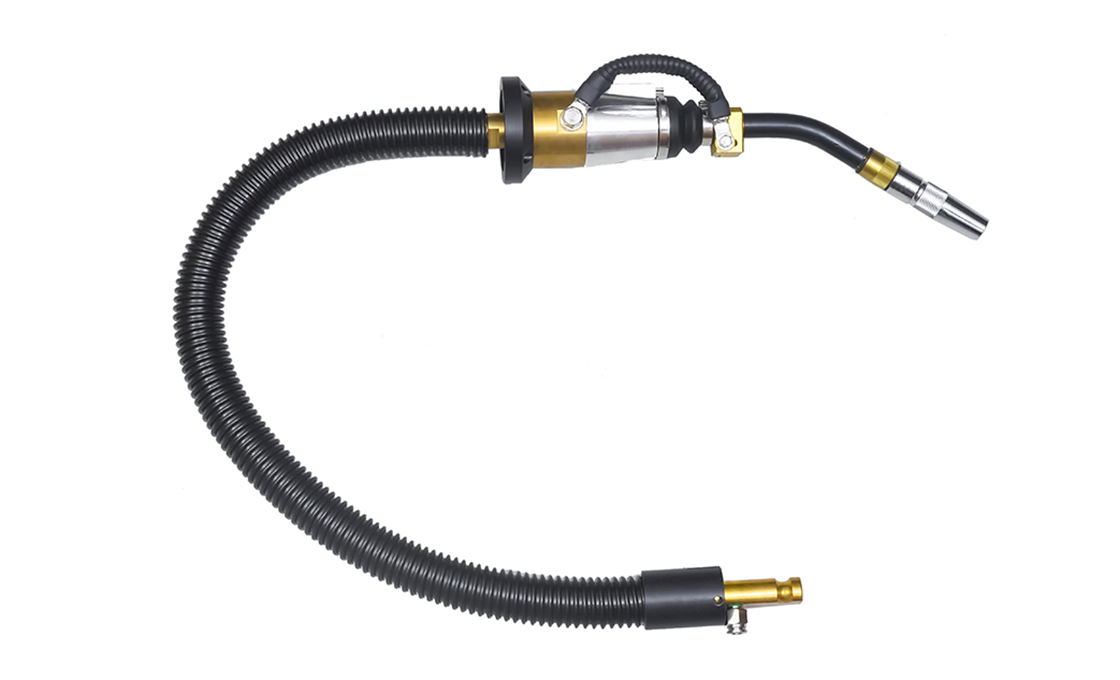
- Production Volume & Automation: For high-volume runs, prioritize guns compatible with automatic stud feeders and robotic integration. Equipment can be mounted on robotic arms, multi-axis CNC tables, or CNC-controlled systems for precise, programmable positioning. Automation ensures repeatable weld quality, maximizes throughput, reduces operator fatigue, and enhances safety. For varied or lower-volume work, a versatile manual gun may suffice.
- Portability & Ergonomics: For on-site or manual work, consider the gun's weight, cable length, and balance to minimize operator fatigue and ensure comfort.
- System Compatibility: Ensure the gun integrates with your existing welding system and power supply.
- Accessories & Customization: Options like shielding gas compatibility, ceramic ferrules, different lift heights, and specialized nose cones can address specific challenges like welding aluminum or reducing spatter.
- Industry Application: Consider your specific sector requirements (e.g., construction, automotive, appliance production, metal fabrication) when making your selection.